Level Design: Super Mario RPG (Part 2)

As I mentioned in my previous post, for my latest game design prototyping challenge, I decided to design a secret bonus level for Super Mario RPG. My goal in designing the stage was to create a fun and engaging experience that adapts the fun of a theme park experience into the Super Mario RPG universe. The allure of the stage is solving the mystery of the mysterious toymaker clown Karakas, whose funhouse factory has allegedly been abandoned. The factory has been locked, however, and there are four keys spread out throughout the amusement park that are used to unlock it, so the quest begins with a scavenger hunt throughout the amusement park to find the keys. Once the players find the keys, they can open up the factory and explore it, solving puzzles and fighting enemies along the way. They eventually reach the top of the dungeon to discover a closed jack-in-the-box. When they go to leave, however, Karakas springs out of the box and drags the players inside. He reveals his scheme to turn them all into toys and keep them in his lair forever, and a boss fight ensues. Once the players defeat Karakas, they are rewarded with exceptional weapons to aid them with the final few levels of the game.

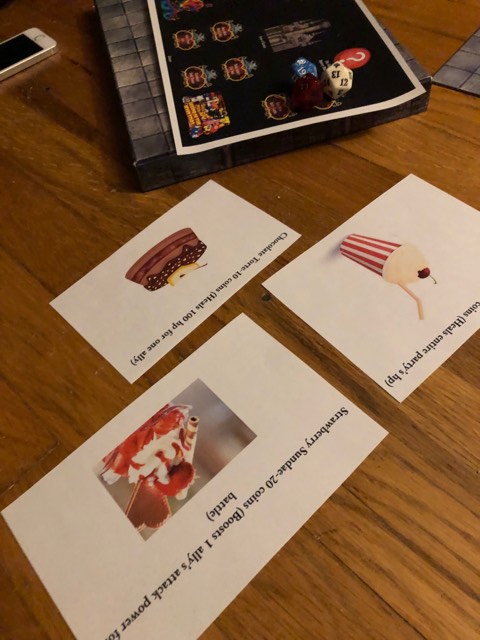
This time around, my process was focused on playtesting and iteration. I went through a very quick process, where I would test and then iterate and repeat the process, allowing myself to make lots of improvements and changes over a relatively short amount of time. The big difference with testing this time around was that I had more polished playtest materials, as can be seen below:

Players appreciated these new materials and were more able to become fully immersed in the game world. They also allowed me to cover more ground and get through more of the adventure in individual playtests because less time was put into verbal descriptions and scene setting, as much of what the players needed was right in front of them. For both of these reasons I will make the case that using more visual materials helps greatly with playtesting, because they allow one to skip past the clarifying questions and confusion about the game world and get to high level issues like design and narrative.

Now I won’t say that this process was easy. I easily spent over 20 hours preparing all of the playtest materials and organizing everything, and even then I still wasn’t able to implement everything that I wanted to. But with all of that being said, the payoff when it came to playtesting made it all worth it. Playtesters said that they felt as immersed in this experience as they ever have in a tabletop adventure, and they could actually picture this exact location in Super Mario RPG. In hearing that, I felt that I was successful in both my role as a designer and a playtest facilitator.

During this rapid iteration process, I placed particular emphasis on taking lots of pictures, and part of that was putting myself in the mindset of a photographer. During the action scenes and the exploration of the park, I made it my main objective to take pictures. Normally my emphasis would be on note-taking, but my thought was that if my pictures would good enough and if I took them consistently, that I could extract a lot of the information that I needed from the photographs. Anything that couldn’t be taken from them I decided I could get at the end of the playtest sessions.

For the end of playtest survey, I kept the structure fairly modular, with a set of core questions that I could ask while at the same time recognizing that they may have to be tweaked or changed based on what happened during the playtest. I also recognized that player actions may answer some of them as well, or that player actions would likely inspire new questions. The core list of questions are listed below:

1.) What did you find most fun about this level?

2.) What did you like least about this level?

3.) What is one thing you would change about this level?

4.) Would you go out of your way to play this level?

5.) Is there anything you would add to the level to make it better?

6.) Did you feel that the level was too hard or too easy?

7.) Did this adventure feel like a Mario adventure? Did you feel like you were playing as Mario and friends?

For each playtest this list changed, and since these were questions that I was asking the players in a one-on-one setting, and not a written form that I gave out, it contained a level of modularity that allowed for me to get the most useful information out of each session.

Overall, I feel that the rapid prototyping and playtesting method was very useful, and it allowed for me to design more quickly, efficiently, and effectively over a short period of time, taking what would normally be a multi-week or month process and condescending down into a single week. its undoubtedly a lot of work, but for me it enhanced my work and gave me better, more useful information from playtesting.
Designing a Level: Super Mario RPG

Recently I undertook the challenge of crafting a level for one of my all-time favorite RPGs, Super Mario RPG. Because I love all of the levels that already exist in the game, I decided to undertake the challenge of creating a bonus stage for the game, since the game doesn’t really have any bonus levels. There are secret boss fights in the game, but not any secret levels.

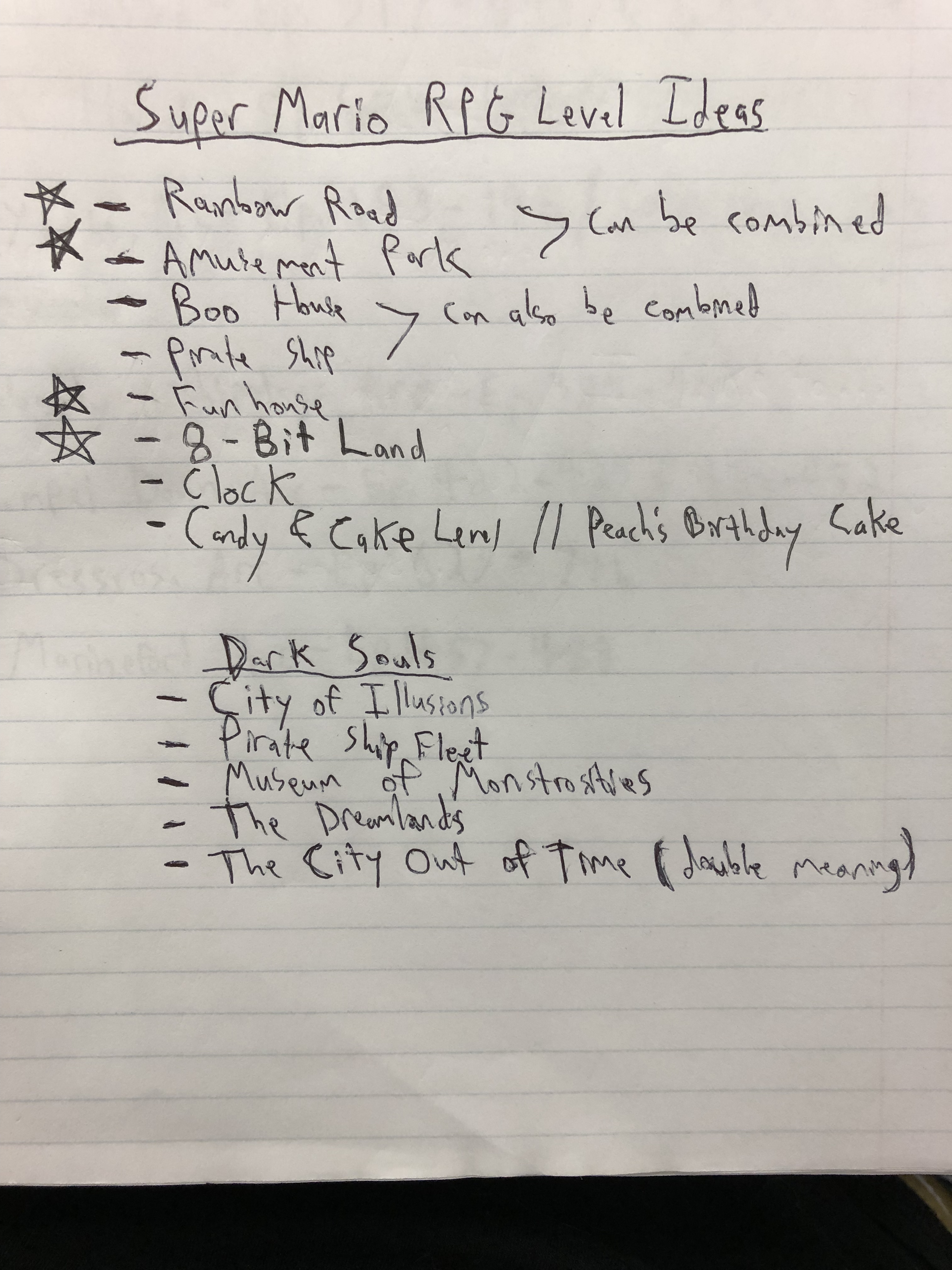
With that challenge in mind, I immediately began the design process by brainstorming a list of interesting ideas for bonus levels, thinking of both theming and specific locations:

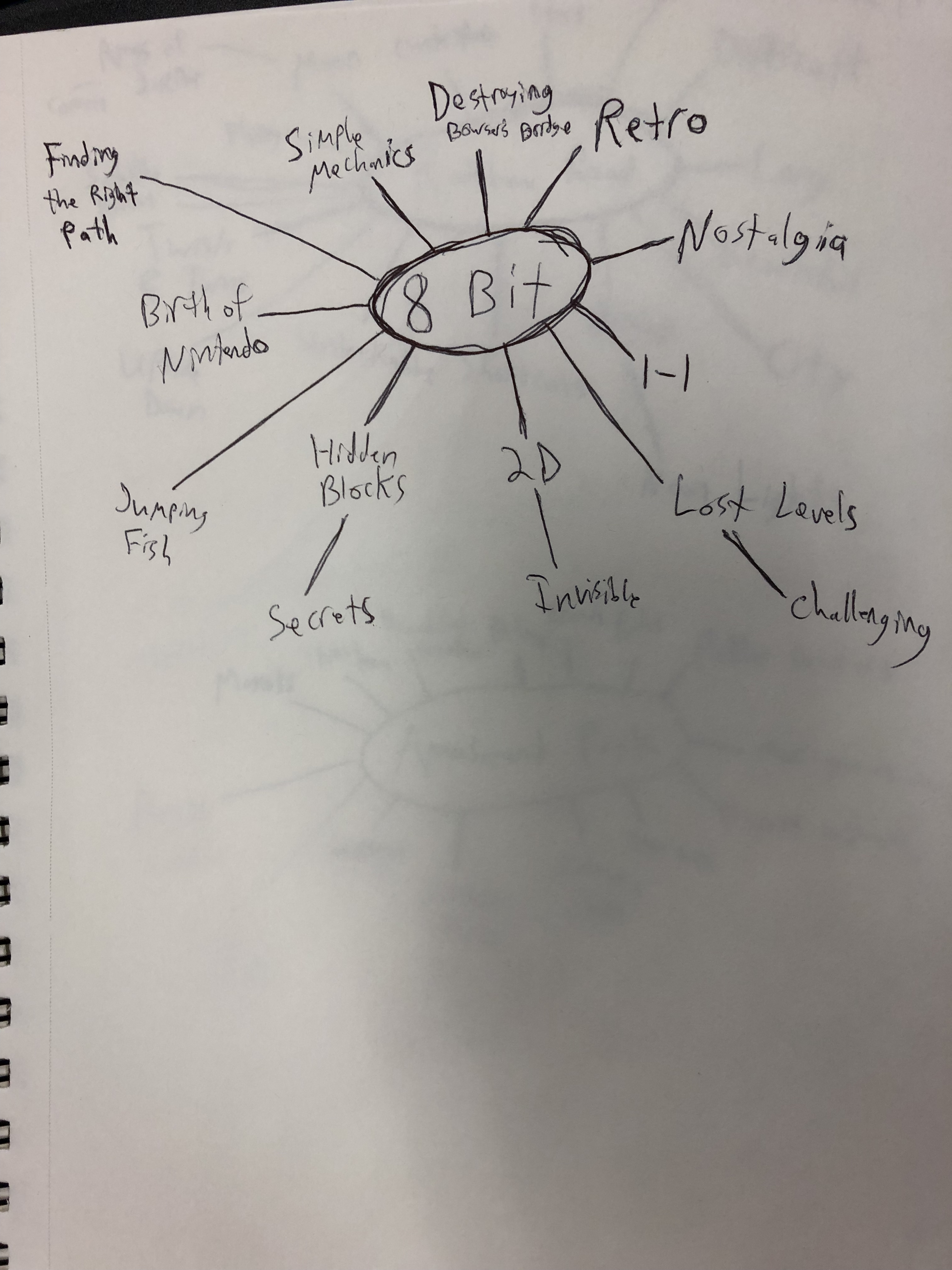
One thing that I found to be particularly interesting is that I found my own location and environment to be a useful source of inspiration. The idea of an 8-bit land came when I was walking through the halls of my graduate university. One the fifth floor of our building we have walls decorated to look like the original Super Mario Bros., and I was daydreaming one day thinking about how cool it would be to live and play in the world of the original super Mario Bros. That daydreaming is what ultimately lead me to the 8-bit world idea for the bonus stage. I would ultimately choose a different concept to go with for this project, but it was still interesting to see how the physical walls around me provided a source of inspiration.

What I ultimately decided to go with is a Rainbow Road themed amusement park. I came up with the Rainbow Road idea while watching a Youtube video about the history of Mario Kart that discusses the franchises popular tracks. The author of the video was talking about how they adapted the stage was adapted successfully as a fighting stage for Super Smash Bros for 3DS, and I immediately had the thought, “Could this work for my project? What would a Rainbow Road RPG stage look like?”

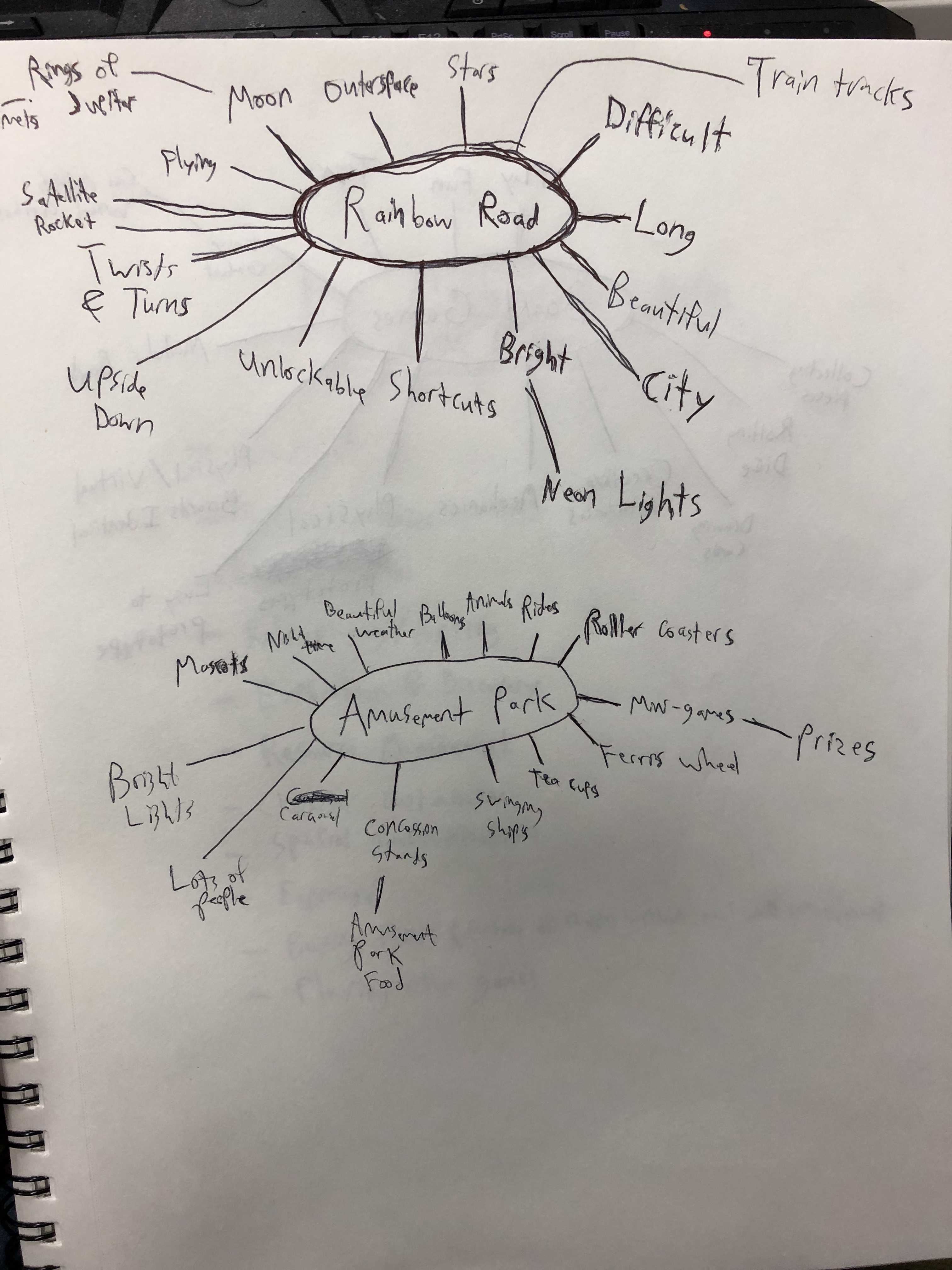
Early on I was really interested in the idea of an amusement park, because I knew that I wanted to create a level that had happy and exciting vibes, as this level would be a bonus level after all. Players should be attracted to the level and be inspired to play it of their own volition. I brainstormed using free word association bubble maps to think about the different creative possibilities of different level designs, as seen below:

While I was brainstorming the possibilities for an amusement park, the phrases “bright lights,” “nighttime,” and “rides” made me think of Rainbow Road, and that’s when it clicked, I should make a Rainbow Road amusement park! And that’s exactly what I did. I designed an amusement park stage complete with games, shops, attractions, and a final dungeon housing the reward of powerful weapons and armor for Mario, Geno, and Mallow, the game’s famous trio.

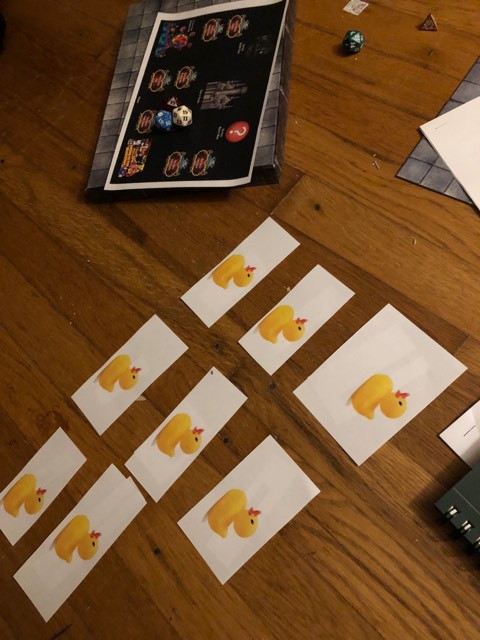
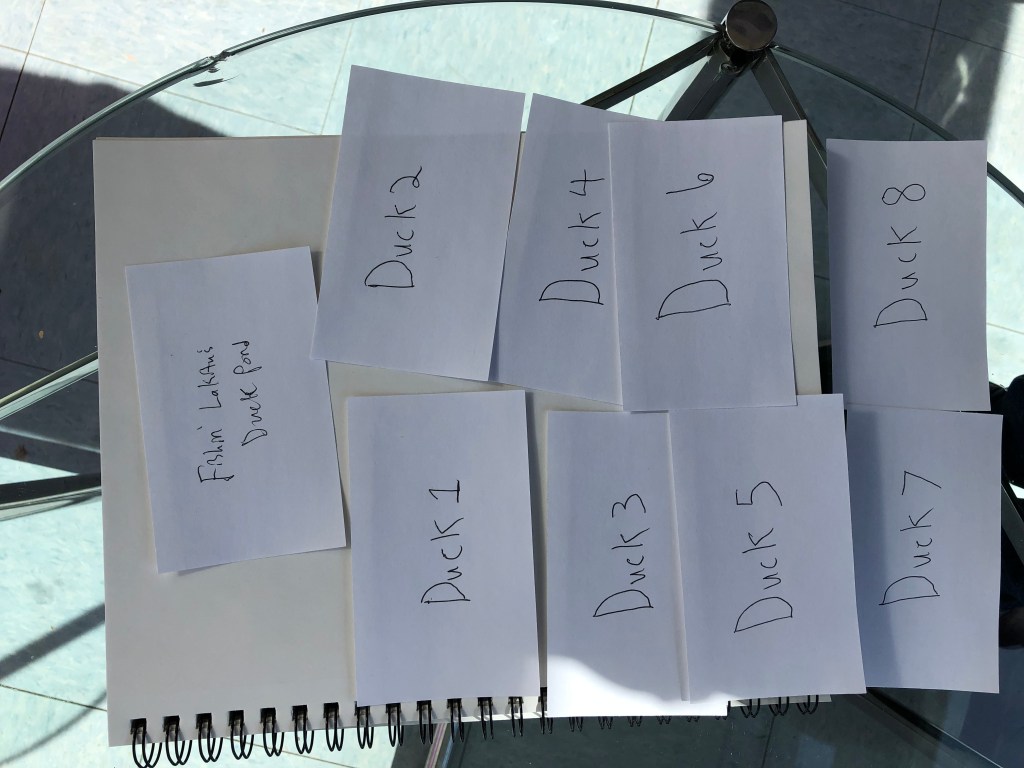
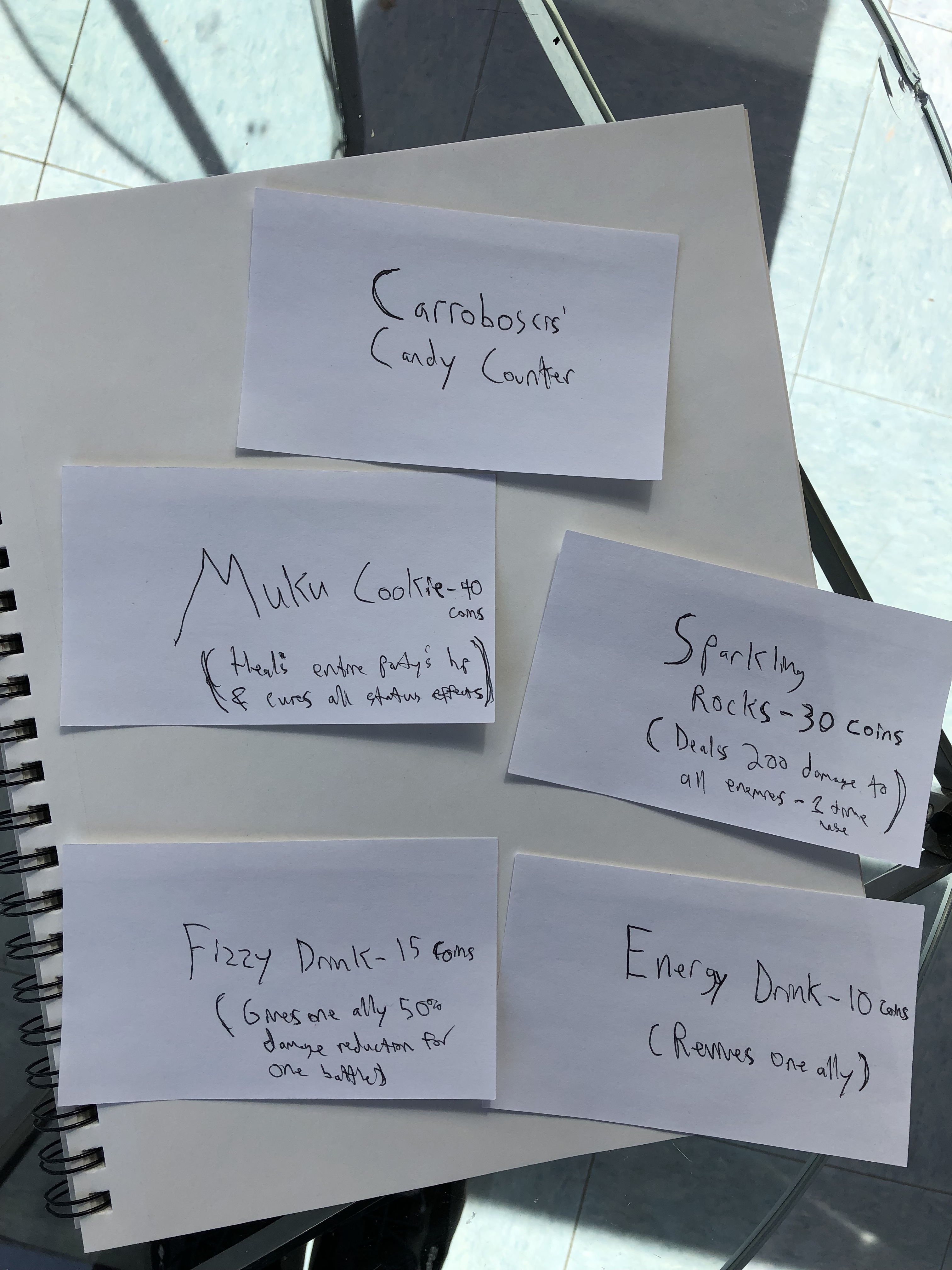
At the time of this writing, I am still in the iteration stage, and am working on making revisions to all of the shops and attractions in the level. To help in this iteration process, I began conducting early playtests by using index cards to represent shops and games, as can be seen below:

One of the games that I playtested is called Fishin Lakitu’s Duck Pond, and it is a game similar to the duck ponds that you find at carnivals where guests pay money to select a duck from the pond and win the prize displayed underneath. I also playtested a shop called Carroboscis’ Candy Shop. In both cases the player enjoyed the experience but said that they wished the things they were interacting with were more “real,” or at least visually represented, since one of the allures of carnivals is the elaborate and eccentric sites of the carnival or amusement park. In future iterations and playtests, my goal is to have stronger visual representations and to create interactions that feel more authentic.

Overall, I feel that the design process is going well, though. I’ll be posting again soon with final results of playtests of the final product, as well as insights that I’ve discovered along the way.

Non-Linear Narrative Prototyping Wrap-Up

I recently finished writing a narrative prototype that explores an alternative ending scenario for the Telltale Batman series titled Batman: The Enemy Within. I completed the prototype as an exercise in writing game narratives. The idea of games having stories with depth that rivals that of a novel is relatively new in the history of gaming, and with branching narratives in particular being largely uncharted territory, I wanted to explore challenges in writing game narratives and develop effective design methods in composing a game narrative.

In this post I will talk about the specifics of my design process as well as the iteration process that went into the design of my Batman: The Enemy Within story.

To begin, I composed a list of interesting questions that are posed in the Batman stories, and of that list I would choose 1 or 2 interesting questions to explore in my prototype. The list of questions included:

1.) What sacrifices does Batman have to make in order to be Batman?

2.) Does Batman make Gotham a better place or a worse place?

3.) Did Batman create the Joker somehow?

4.) Is Batman as crazy as the people he locks up in Arkham?

5.) Does Batman’s code to not kill actually hurt Gotham?

6.) Is Gotham worth saving?

7.) What is Batman’s own enemy within? The Joker’s?

In the end, I decided to explore Batman’s moral code of not killing. That is not to say that I would avoid other questions entirely, but instead I would focus on that one core question in my design and I suspected that other questions would come up more naturally throughout the process. I liked the idea of exploring the question of not killing because it provided a clear binary that would be manageable yet still interesting in terms of player choice and branching narrative. It also allowed me to forego using too many narrative branches early on. One of my initial goals was to avoid overwhelming myself with too many narrative options and then ending up spreading myself too thin.

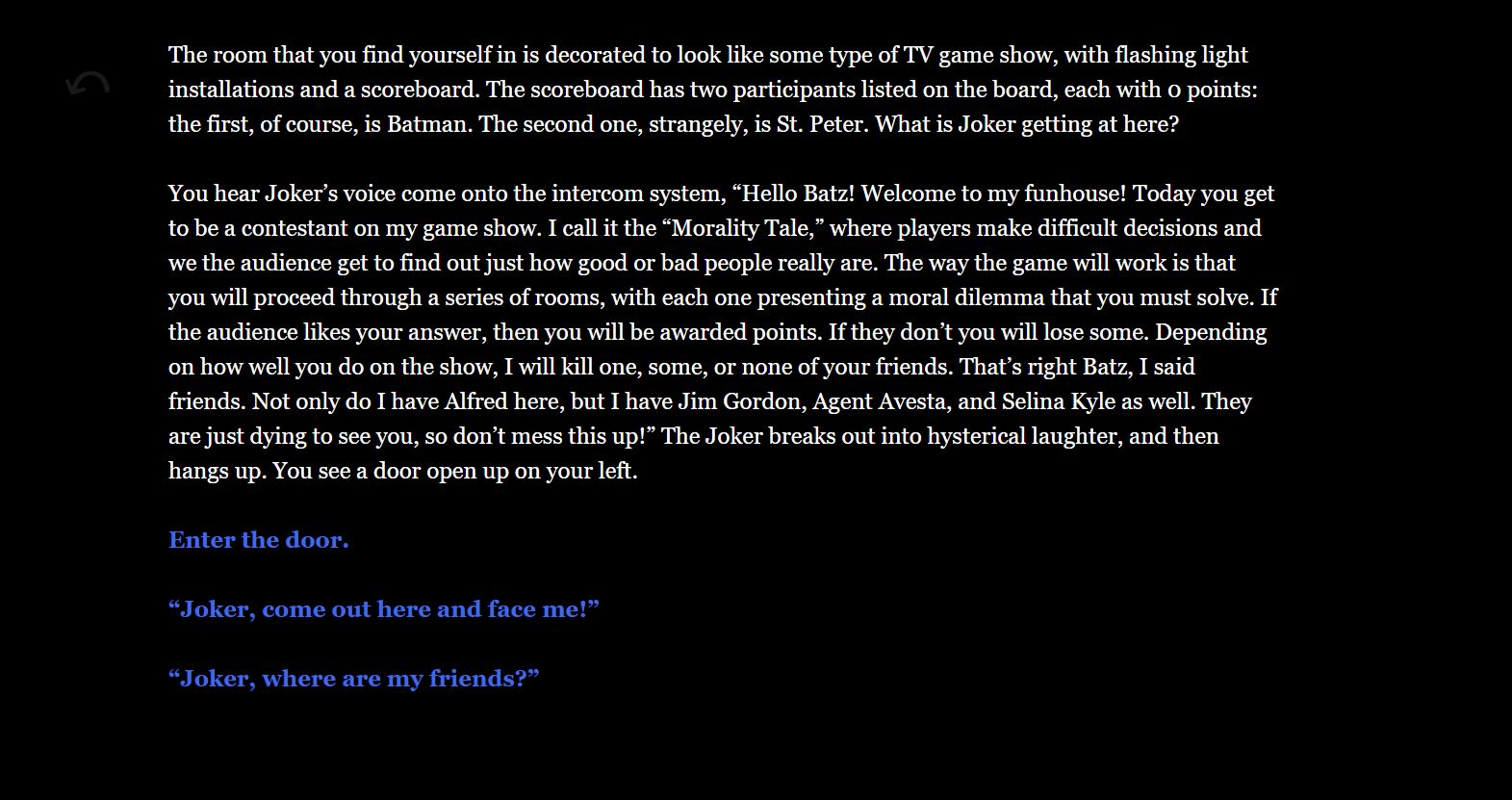
With my question decided, I thought about which villain would make the most sense in this story. My mind immediately went to the Joker, because Joker is the one villain who constantly seeks to make Batman question his own morality. My mind also kept coming back to this idea of a funhouse or a game show (I guess you could say I was “Listening to my subconscious,” as Jesse Schell outlines in his book “The Art of Game Design”), so the pieces slowly started to come together and I was able to create my first prototype.

One challenge that I have as a writer is that I always feel like my first draft needs to be way more polished than a first draft ever actually is. I always feel like all of the narrative beats need to be present and the overall story needs to be there, but my experience as a game designer has taught me that is seldom ever the case. In fact, the design process is a long and iterative process with your final product often being very different from what you started with. Luckily, my designer self superseded my writer self, and I was able to dive into the trenches and write something that was very rough. I wasn’t extremely proud of it, but I was proud that I was able to get something finished and in a relatively short amount of time.

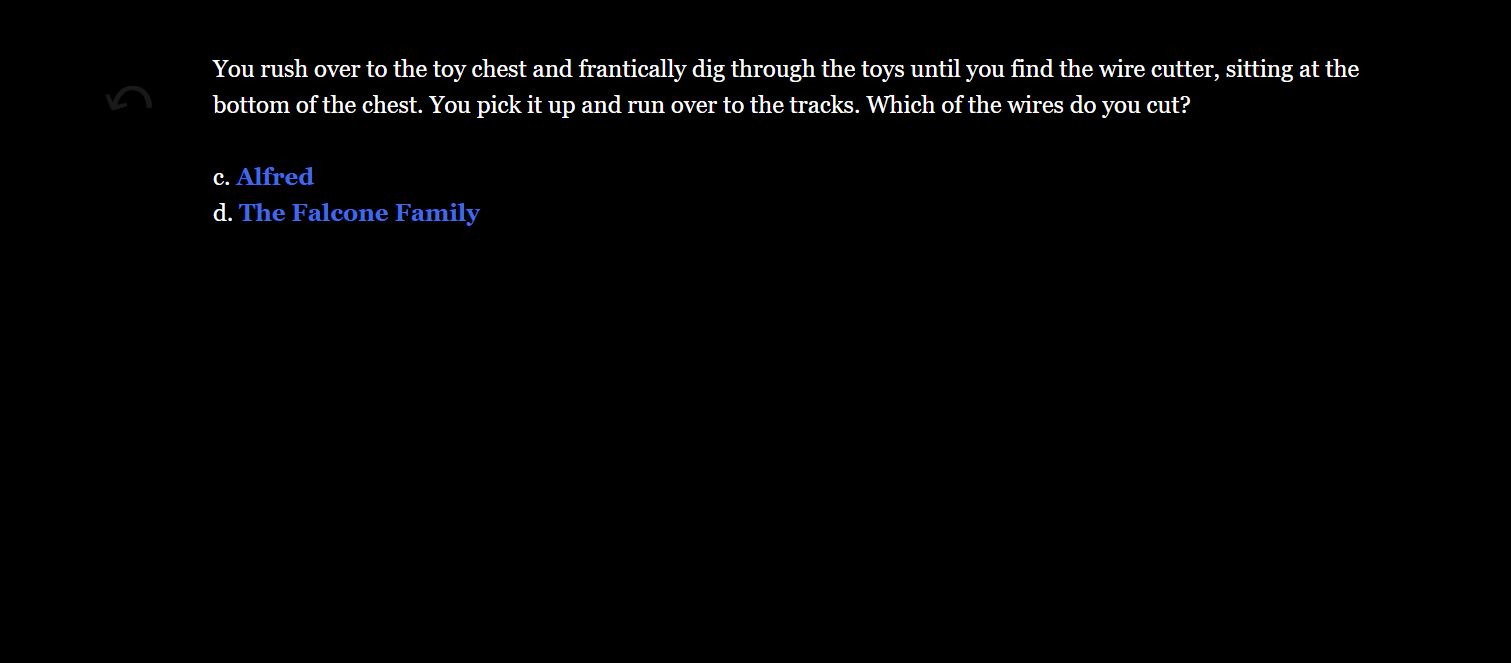
For the iteration phase, I had people playtest the story by playing through the interactive prototype on Twine. The feedback I received was useful, and it really helped me think about both player decisions and the authenticity of the characters. I received the feedback that the first prototype felt like the Joker’s fantasy. The Joker has all of the powerful in the story and Batman has none. In fact, he barely even has a voice. One problem that I discovered with the first iteration is that Batman plays strictly by the Joker’s rules and doesn’t challenge him on anything. He just does what the Joker says. Take the example below:

In the above example, Batman is given a choice to save Alfred or to save a group of criminals from the Falcone crime family. The player does not have the ability to have Batman speak up or defy expectations. In my iterative process, I not only added more options for the player, but included options that gave Batman the power to speak and in some cases, break the rules of Joker’s game entirely.

Through this process, players gained more initiative, Batman started to feel more three dimensional, and the game became more fun. I followed a strategy similar to that of Telltale Games, where players are given many options throughout the game, but only a select few change the course of the story in a significant or permanent way, with other options either changing only small parts of the story or simply looping back to the main story. I don’t think that my narrative branches and story threads are perfect, but I am pleased with the progress that I made in such a short amount of time.

This project has really helped to prepare me for future narrative prototyping and has helped me to develop an effective design process that will help me to be more efficient in developing future prototypes.

Developing An Alternative Conclusion to Telltale’s Batman: The Enemy Within–A Practice in Narrative Prototyping

As part of an exercise to gain exposure in narrative prototyping and creating branching narratives, I undertook the task of writing my own Batman storyline. In particular, I wrote my own conclusion to the Telltale Batman saga titled, The Enemy Within. I chose Batman because Batman is a superhero that I grew up with and still have a great appreciation for, and I think that the Batman mythos is one that is narratively rich, with a wide array of deep characters and fascinating villains. I felt confident that I could pull on my extensive knowledge of the comics and combine it with my own perspective on Batman to make something interesting.

Since this prototype was meant to play like a Telltale game, the first design question that I tackled was, “What types of decisions can I offer players that are both narratively engaging and mechanically interesting. In other words, I wanted to offer players decisions that were both challenging to make and that would impact the greater story in some way. In some cases that meant creating a branch in the story, and in others it meant smaller but still significant shifts in the story.

To come up with an idea, I brainstormed tough questions that Batman wrestles with in the larger mythos, and after coming up with a list, I thought about which ones could be adapted to the decision-style gameplay of the Telltale games. In the end, there was one moral question that I felt really lay at the center of the Batman mythos, and that is the moral question of whether or not it is okay to kill for the greater good. While the question is quite prolific, it ultimately comes down to a binary–kill or don’t kill, and those two simple choices seemed narratively impactful while avoiding the problem of too many choices or branches.

What I eventually came up with is a story surrounding Batman and the Joker, where Joker takes over part of Arkham Asylum traps some of Batman’s friends inside. Joker turns the Asylum into a sort of “moral funhouse,” where Batman must enter the funhouse, play Joker’s games in which Batman is asked to answer tough moral questions, and then face the Joker and make the ultimate defining choice in determining who Batman is as a superhero.

Currently, I am in the playtesting and iteration stage, where I am seeing what choices in the story are working and which aren’t, as well as how well the larger story is working. The hardest challenge thus far has been creating meaningful choices for players, particularly at the beginning of the story. It sort of feels like there is an obvious thing that Batman would do in a lot of the scenarios, so creating multiple choices that feel like true Batman choices has been challenging. My plan is to get feedback from playtesters about whether or not the decisions listed feel authentic or not, and then to iterate accordingly.

So far, though, the project has been a ton of fun, and its been incredibly rewarding writing a story for the Batman mythos!